

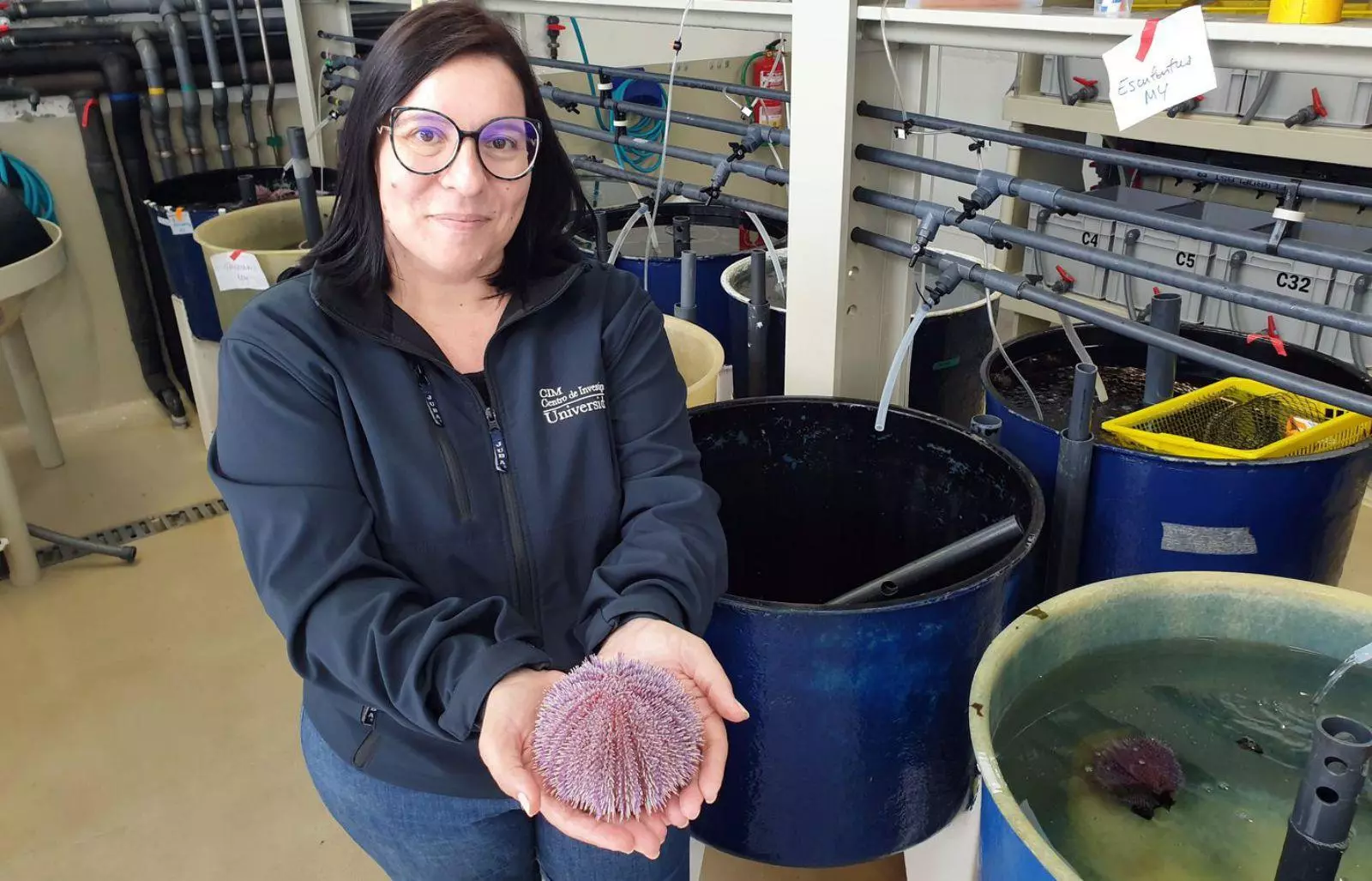
Experts from the Marine Research Center (CIM) use Aurelia aurita larvae as an experimental model
The Marine Research Center (CIM-UVigo) has turned to jellyfish as an experimental model to improve the cryopreservation of high-value resources such as mussels, clams, cockles, and sea urchins. The Icemedusa project, which has just started in the Ecimat laboratories in Toralla, will use Aurelia aurita larvae, a species found in oceans worldwide, to analyze the processes that occur during freezing and then transfer the knowledge gained to the techniques already developed for the species of greatest interest in the Rías Baixas.
“It is a very versatile and transparent animal, which allows us to easily observe all the organs and factors such as feeding rate. However, the mussel or sea urchin larvae we work with have an irregular shape, as well as structural elements that make it difficult to know what happens to the water inside the cells when we freeze them. We always dehydrate them to reduce the possibility of ice formation, but we want to know which parts we are unable to dehydrate or which organs are affected. Our idea is to use ephyrae, the jellyfish in their larval stage, as a model organism to understand all of this,” explains Estefanía Paredes. Ramón y Cajal researcher at CIM and project lead.
The study has a duration of three months and is funded with €7,500 through a joint call by the Provincial Council and the University of Vigo for young researchers. “It’s a fantastic opportunity because, if we demonstrate that the jellyfish is as good a model as we believe, we will use the data obtained as a basis to apply for a larger project focused on studying the water inside mussel larvae,” she explains.
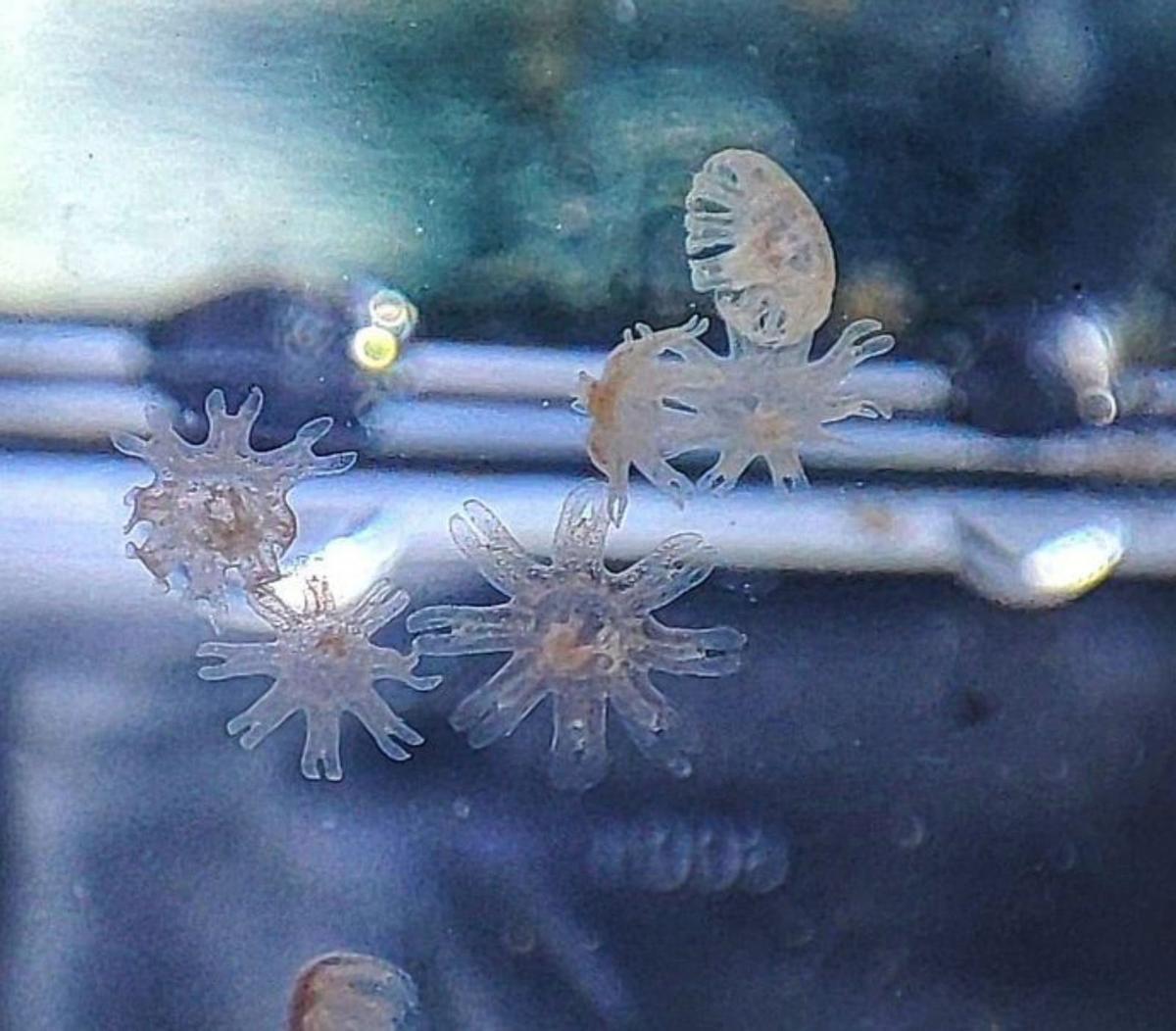
Aurelia aurita, known as the common jellyfish or moon jellyfish, is a “very cosmopolitan” species, also found in Galicia, with a size ranging between 25 and 40 centimeters. Its larvae, measuring 1–2 millimeters, have a star-shaped form.
“This week we have been testing how to handle them in the laboratory without causing damage. What we are going to do is freeze them and then, at the moment of thawing, analyze whether there is localized damage. Because they are transparent, we can stain them and observe under a fluorescence microscope if ice crystals are affecting the stomach area or the nerve ganglia,” explains Paredes.
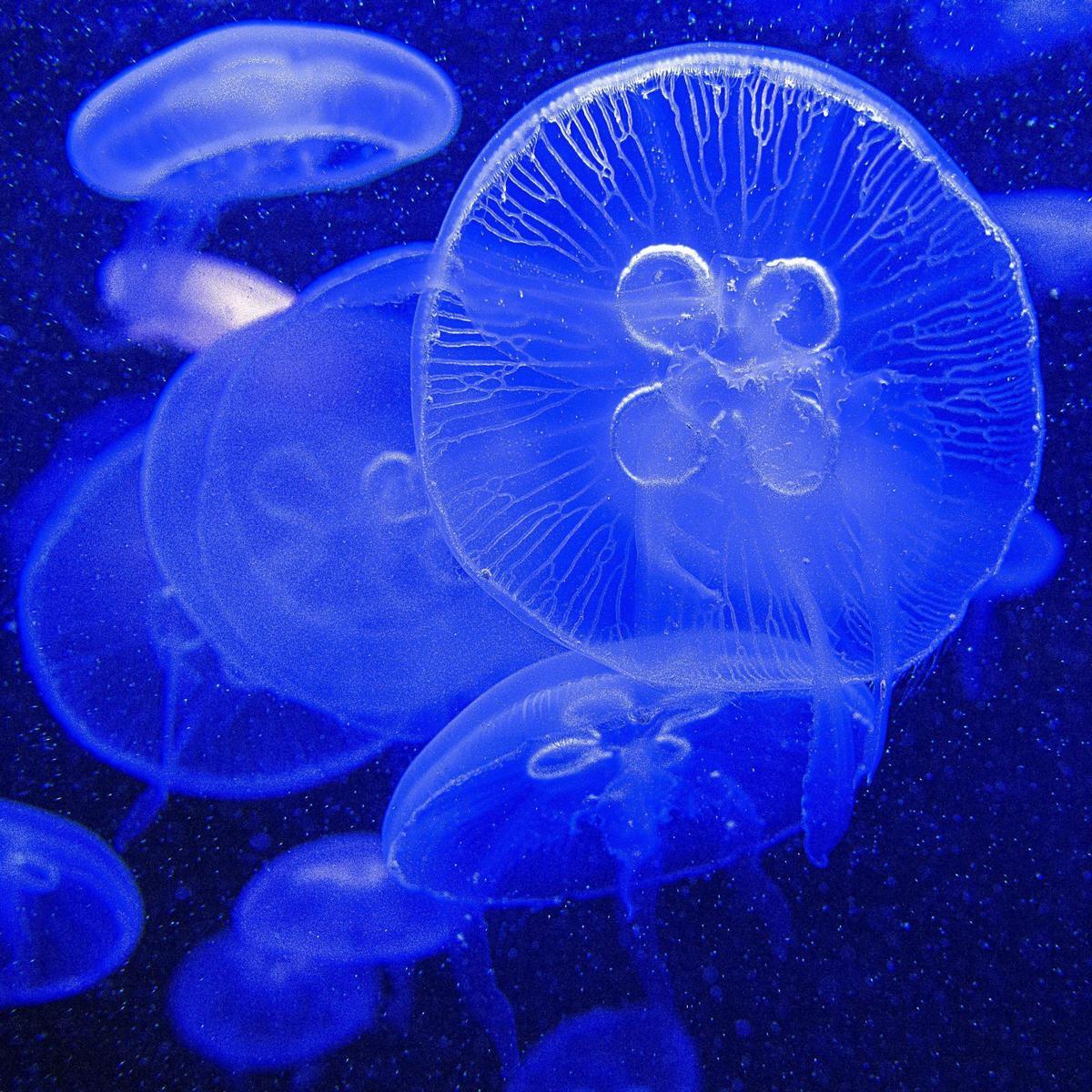
The researchers will also study a series of biological parameters to determine whether the animal is healthy, that is, if it swims, grows, and feeds normally.
The results obtained will allow the improvement of cryopreservation techniques that have been refined over the past few years since Paredes began this line of work at CIM: “We will apply them to commercially valuable organisms in the Rías Baixas that we work with, such as mussels, clams, cockles, and sea urchins. They will also help us advance in processes that, until now, we were unable to carry out.”
Cryopreservation techniques allow biological material to be maintained at very low temperatures and, although their use in the marine field is relatively recent, they have great potential for conserving biodiversity and supporting the study and restocking of various species.
The most critical elements of the process are the freezing rate and the cryoprotectants, which prevent ice formation inside the organisms. “Jellyfish are organisms that detect chemical toxicity very quickly and will be very useful for us in trying to identify cryoprotectants with minimal toxicity,” she emphasizes.
This characteristic also makes them excellent indicators of marine pollution. One of the areas in which the use of this animal could assist other researchers at the University of Vigo. “Surely other groups will be able to benefit from the knowledge we are gaining with this project,” adds Paredes.
And other potential beneficiaries are aquariums, which they have already contacted: “We focus on aquaculture, but if we develop a cryopreservation protocol for jellyfish, it may be of interest to them.”