

With the participation of specialists from eight universities and the CSIC
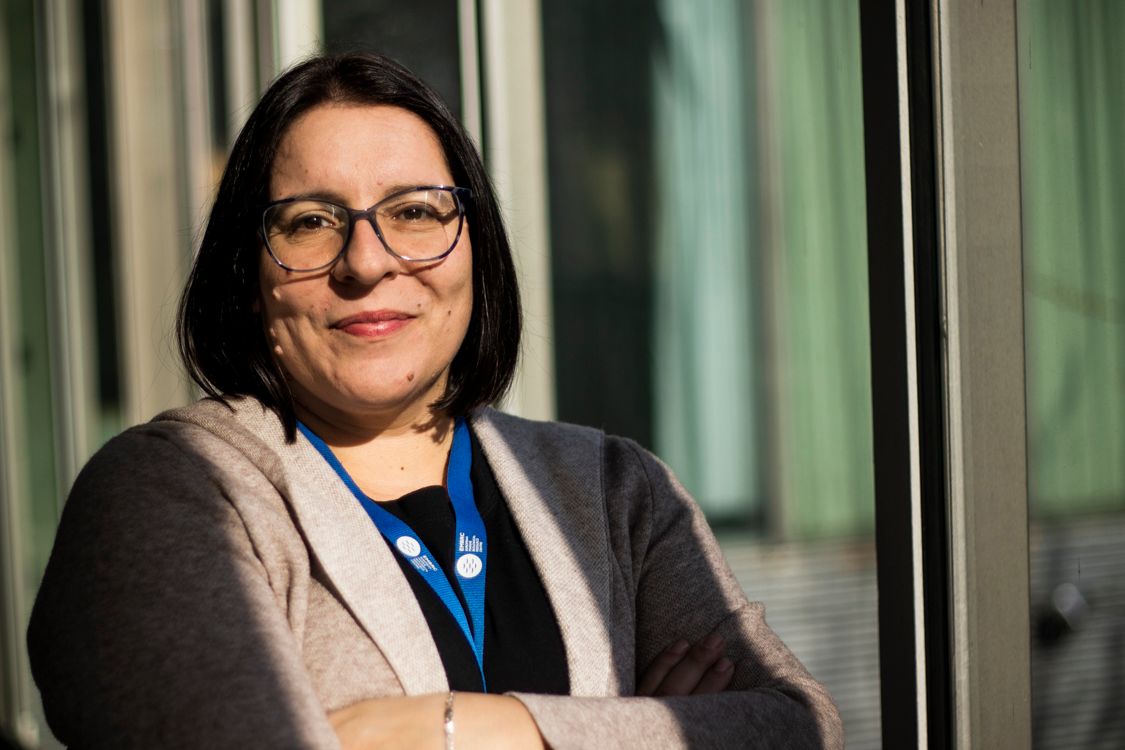
The University of Vigo, through the Marine Research Center (CIM), leads SecrioNet, an innovative national scientific network for the development and collaboration in cryobiology, recently funded under the 2024 “Redes” call of the Spanish State Research Agency. The project, coordinated by CIM researcher Estefanía Paredes Rosendo, marks a milestone in structuring cryobiological knowledge in Spain.
SecrioNet emerges within the context of the recently established Spanish Society of Cryobiology (SECrio) as a response to the lack of a national structure connecting professionals from different fields —biomedicine, animal and plant biology, aquaculture, agriculture, and conservation— who develop or apply cryopreservation techniques in their research.
“Cryobiology is a strategic tool for biodiversity conservation, genetic improvement, food security, and biotechnological development in Spain,” explains Paredes, president of SECrio.
A multidisciplinary network with an international scope
With the participation of specialists from eight Spanish universities and research centers (University of Vigo, University of Valencia, Autonomous University of Barcelona, Valencian Institute of Agrarian Research through CITA, Polytechnic University of Valencia, University of Seville, Spanish National Research Council through ICTAN-CSIC and MGB-CSIC), SecrioNet brings together experts in plant, animal, marine, food, and medical cryobiology, among others. Its dual objective is to strengthen scientific collaboration and to bring advances in cryobiology closer to the business sector, public administrations, and society at large.
Among its main actions are: the creation of the first national map of laboratories, companies, and specialists in cryobiology; the organization of the 1st Meeting of Cryobiology Researchers in Spain; the implementation of continuous training through online seminars, forums for young researchers, and scientific outreach campaigns; the development of a guide on responsible research and innovation in cryobiology; and the formulation of advisory strategies for public administrations on biobanks, genetic resource conservation, and related legislation.
Technology for the great challenges of the 21st century
Cryobiology, the science that studies the effects of low temperatures on biological systems, has key applications in the context of climate crisis, biodiversity loss, and the need for sustainable food production. From the preservation of animal and plant gametes and embryos to the creation of genetic resource banks for endangered species, this technology is emerging as a cornerstone in conservation and development strategies.
According to its founders, SecrioNet’s strength lies in its deeply multidisciplinary approach, which allows cryobiology to be addressed from a comprehensive perspective.
SecrioNet is coordinated by researcher Estefanía Paredes Rosendo, a Ramón y Cajal researcher in the Ecocost Group at the Marine Research Center (CIM) of the University of Vigo, a specialist in marine cryobiology and president of the Spanish Society of Cryobiology.
From the University of Valencia, Daniel Ballesteros from the Cryoconex group, a botanist expert in the use of cryopreservation for the conservation of exceptional plant species, and Miguel Ángel Silvestre Camps from the Biotsperm group, focused on animal gamete cryobiology, participate.
At the Autonomous University of Barcelona, Professor Maria Teresa Mogas Amorós leads a team with extensive experience in oocyte and embryo cryopreservation in livestock species.
From the Valencian Institute of Agrarian Research (CITA-IVIA), Eva Teresa Mocé Cervera contributes her expertise in genetic resource conservation in livestock species, including both mammals and birds.
At the Polytechnic University of Valencia, Víctor Gallego Albiach works on the cryopreservation of fish gametes, including marine and freshwater species.
From the technology company CryoBioTech, Professor Ramón Risco Delgado (University of Seville/Selecta) contributes developments in applied physics and vitrification technologies.
The Spanish National Research Council (CSIC) participates through Antonio Diego Molina García, from the Institute of Food Science and Technology (ICTAN), an expert in food cryobiology and biophysics, and Elena Corredoira Castro from the Misión Biológica de Galicia (MBG-CSIC), specialized in cryopreservation of forest species.
SecrioNet positions itself as a network capable of generating cross-cutting solutions, training professionals with a broad vision of cryobiology, and providing expert advice to public and private institutions with a holistic, sustainable, and high-impact approach. SecrioNet also has an international dimension, aiming to position Spanish science within global networks and promote cooperation with Latin America and other Spanish-speaking countries, leveraging Spanish as the working language.